
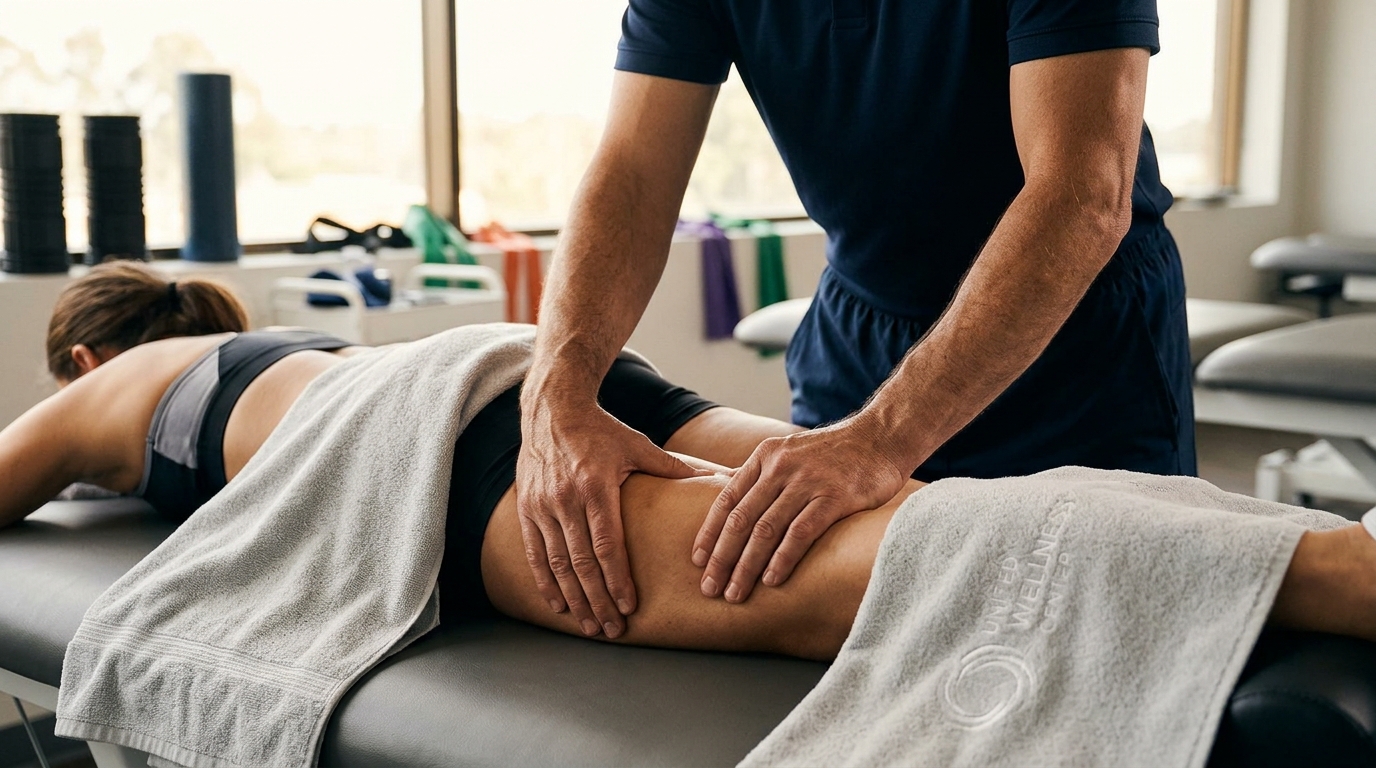
Recovering from a sports injury often involves managing residual muscle tightness that limits range of motion and performance. At United Wellness Center in Reston and McLean, VA, our clinicians utilize evidence-based manual and mechanical therapies to restore tissue health. This guide outlines seven primary techniques used to release tight muscles, helping you understand the specific mechanisms and benefits of each approach for post-injury rehabilitation.
1. Manual Soft Tissue Therapy
Deep tissue manipulation breaks down adhesions and restores blood flow to injured areas. Manual therapy involves the clinician using hands, elbows, or thumbs to apply sustained pressure to specific muscle knots. This technique is fundamental in physical therapy and chiropractic care for addressing hypertonicity. It helps reduce local inflammation and improves tissue elasticity without the need for invasive tools.
2. Dry Needling
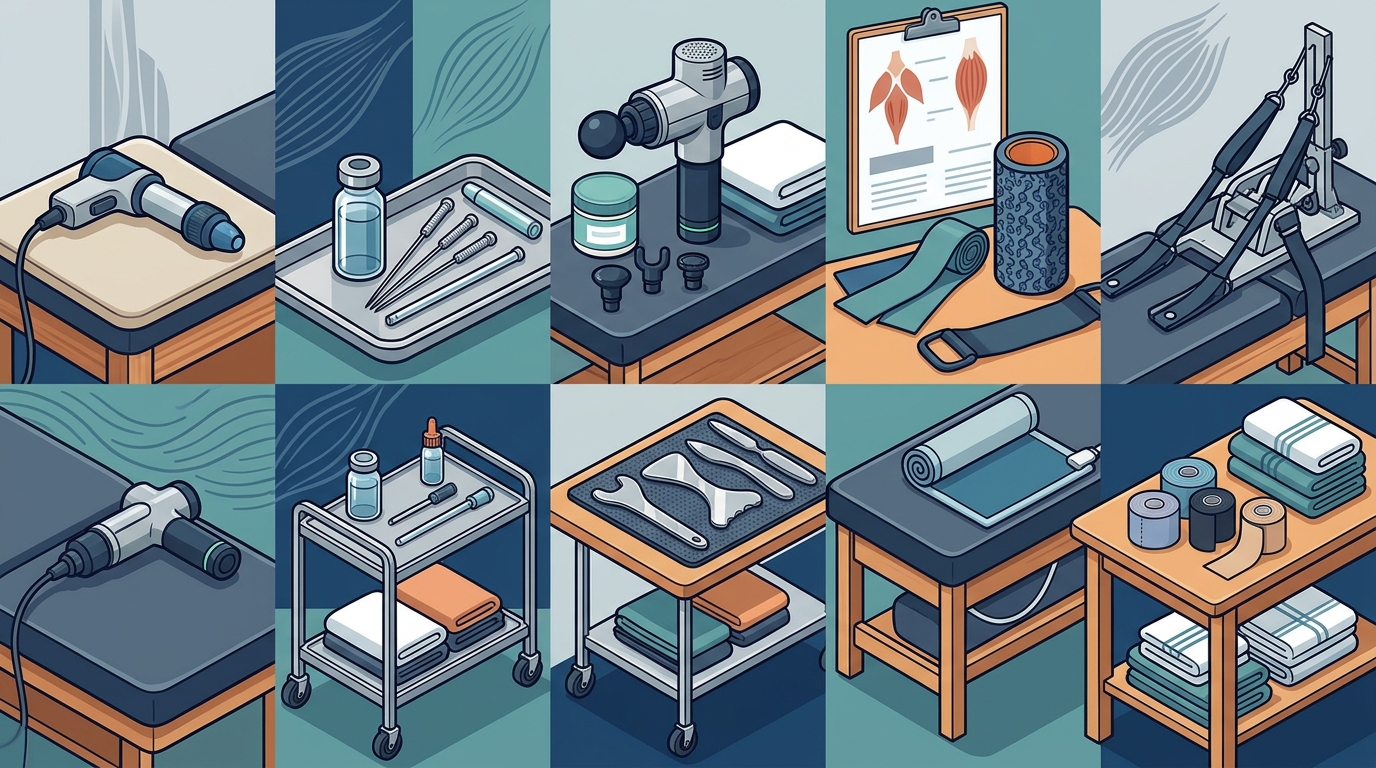
Targeted needle insertion deactivates trigger points to reduce pain and muscle tension. Dry needling is a clinical technique where a thin filament needle is inserted into a trigger point to relieve myofascial pain. The needle stimulates a local twitch response, which resets the motor unit and reduces the chemical irritants causing tightness. This method is highly effective for deep-seated muscle knots that are difficult to reach with manual pressure alone.
3. Shockwave Therapy
4. Instrument-Assisted Soft Tissue Mobilization
5. Myofascial Release
Gentle, sustained pressure releases restrictions in the connective tissue network. Myofascial release is a manual therapy technique that applies gentle, sustained pressure to the fascia to release restrictions. The fascia is a web-like connective tissue that surrounds muscles and organs. By addressing fascial restrictions, clinicians can improve overall body mechanics and reduce compensatory tightness in adjacent muscle groups.
6. Active Release Technique
Combining movement with pressure releases specific muscle and tendon adhesions. Active release technique is a method where the clinician applies pressure to a specific area while the patient moves the limb through a range of motion. This dynamic approach targets specific muscles, tendons, and ligaments that have become tight or scarred. It is highly effective for addressing functional limitations caused by repetitive strain or acute injury.
7. Eccentric Stretching Protocols
Controlled lengthening under load rebuilds muscle strength and flexibility. Eccentric stretching is a rehabilitation exercise where the muscle lengthens while under tension. This type of loading is crucial for remodeling collagen fibers and restoring normal muscle length. It helps prevent re-injury by ensuring the muscle can handle the demands of sport after the acute healing phase.
Choosing the Right Technique
The optimal technique depends on the specific injury, the stage of healing, and the patient's pain tolerance. Acute injuries may require gentle myofascial release, while chronic conditions might benefit from shockwave or dry needling. A comprehensive assessment by a licensed clinician ensures the correct modality is selected for your recovery goals.
Frequently Asked Questions
Is dry needling safe for sports injuries?
Yes, when performed by a trained and licensed professional, dry needling is a safe and effective treatment for sports injuries. It is designed to target specific trigger points and is generally well-tolerated by patients.
How many sessions of shockwave therapy are needed?
The number of sessions varies based on the severity of the injury and individual response. Typically, a series of three to five sessions is recommended, with intervals of one to two weeks between treatments.
Can I do these techniques at home?
While some stretching and self-massage techniques can be performed at home, advanced modalities like dry needling and shockwave therapy require professional equipment and training. Always follow the guidance of your healthcare provider.
Does muscle release therapy hurt?
Some discomfort is normal during treatment, especially when addressing deep trigger points or adhesions. However, the pain should be manageable and should not worsen significantly after the session. Clinicians adjust pressure based on patient feedback.
How long does it take to see results?
Many patients experience immediate relief in pain and range of motion after the first session. However, full recovery and functional improvement often require a series of treatments combined with a structured exercise program. Learn more: Checking your browser.