
How to Treat Running and Cycling Injuries at a Sports Chiropractic Center
Repetitive impact injuries account for a significant portion of sports-related medical visits, with running alone causing millions of injuries annually. According to data from the American Journal of Sports Medicine, overuse injuries are the primary reason athletes seek professional care, often stemming from biomechanical imbalances that chiropractic and physical therapy can correct. This guide details how a specialized sports chiropractic center addresses the unique physiological demands of runners and cyclists. (About Us United Wellness)
Understanding Biomechanical Imbalances
Running and cycling are low-impact activities in theory, but the sheer volume of repetitions creates high cumulative stress on the musculoskeletal system. Biomechanics is the study of the structure and function of biological systems by means of the methods of mechanics. When a runner’s gait is inefficient or a cyclist’s bike fit is misaligned, specific muscle groups become overworked while others remain dormant. (COVID 19 PATIENT GUIDELINES)
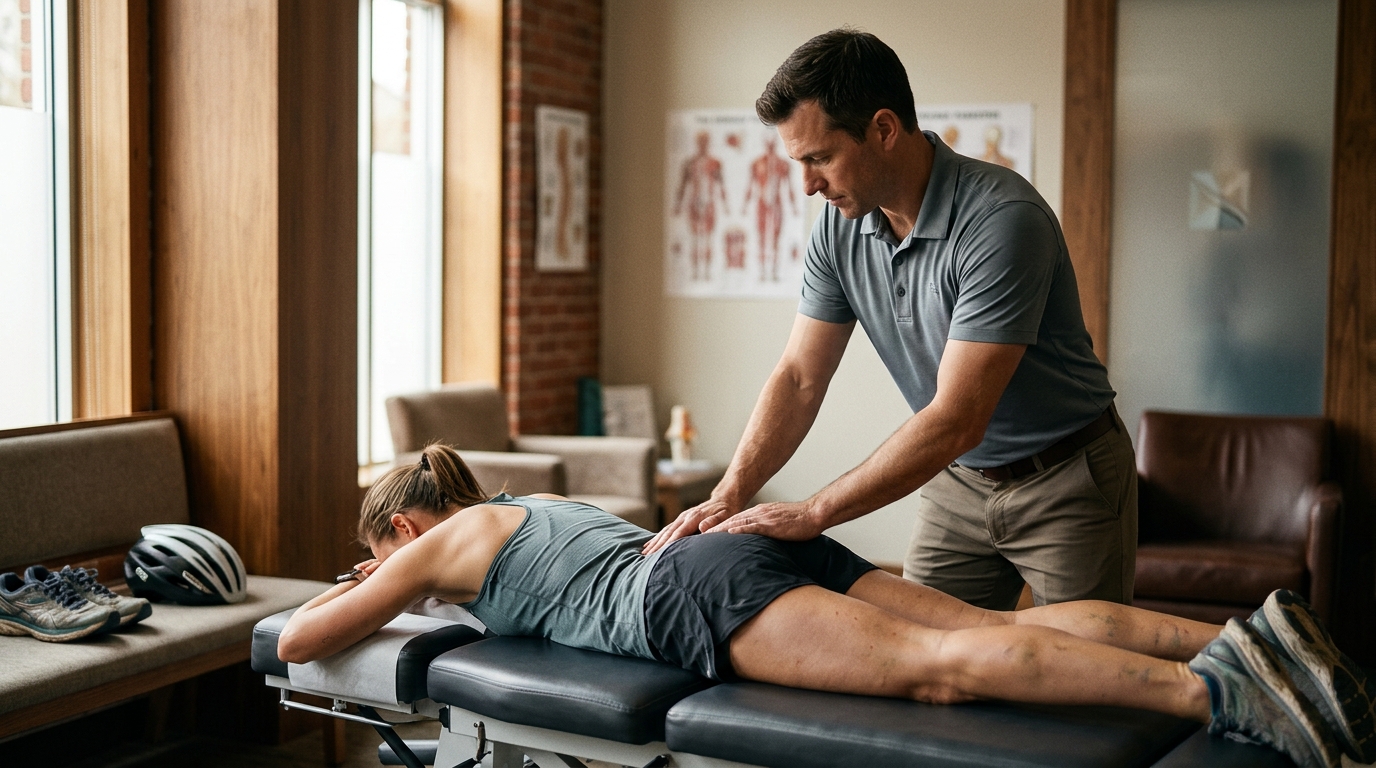
At a sports chiropractic center, the initial evaluation goes beyond pain management. Providers analyze the kinetic chain to identify where the breakdown occurs. For example, a knee injury in a cyclist might originate from a restricted hip joint or a misaligned pelvis. Correcting these foundational issues is essential for long-term recovery and performance enhancement. (Sports Therapy amp Chiropractic)
Common Running Injuries and Protocols
Runners face a distinct set of challenges due to the repetitive impact forces generated with every stride. The most prevalent issues include plantar fasciitis, shin splints, and iliotibial (IT) band syndrome. Effective treatment requires a targeted approach that addresses both the acute pain and the underlying cause.
Plantar Fasciitis and Foot Mechanics
Plantar fasciitis involves inflammation of the thick band of tissue that runs across the bottom of your foot. This condition is often exacerbated by tight calf muscles and poor arch support. Treatment typically involves manual therapy to release tension in the foot and lower leg, along with custom orthotics to provide structural support. Custom orthotics are specially designed shoe inserts that correct biomechanical abnormalities in the foot.
Shin Splints and Tibial Stress
Medial tibial stress syndrome, commonly known as shin splints, causes pain along the shinbone. This is frequently linked to overpronation or sudden increases in training intensity. Chiropractic care focuses on decompressing the lower spine and adjusting the ankle joint to improve mobility. Shockwave therapy is often utilized to stimulate blood flow and accelerate tissue healing in the affected area.
IT Band Syndrome and Hip Stability
The iliotibial band runs from the hip to the knee. When tight, it rubs against the femur, causing sharp knee pain. This is often a sign of weak hip abductors. Treatment includes Graston Technique, a form of instrument-assisted soft tissue mobilization, to break down scar tissue. Strengthening exercises are then prescribed to stabilize the hip and prevent recurrence.
Cycling-Specific Pain and Adjustments
Cycling is a non-weight-bearing sport, which can mask underlying weaknesses until they manifest as pain. Cyclists often suffer from lower back pain, neck strain, and saddle sores that lead to nerve compression. The repetitive pedaling motion requires precise alignment to avoid chronic strain.
Lower Back Pain and Pelvic Alignment
Lower back pain is the most common complaint among cyclists. It often results from a forward-leaning posture that strains the lumbar spine. Chiropractic adjustments help restore proper pelvic alignment and spinal mobility. This reduces the compressive forces on the vertebrae and allows for a more efficient riding position.
Neck Strain and Handlebar Position
Neck pain in cyclists is frequently caused by poor handlebar height or excessive time spent in an aggressive aerodynamic position. Manual therapy and cervical adjustments can relieve tension in the neck and shoulders. Additionally, bike fit analysis is crucial to ensure that the rider’s posture does not exacerbate existing spinal issues.
Saddle Numbness and Nerve Compression
Prolonged pressure on the perineum can lead to nerve compression and numbness. While saddle adjustments are the primary prevention, chiropractic care can address any resulting pelvic misalignment. Restoring balance to the pelvic floor and surrounding muscles is essential for returning to pain-free riding.
Advanced Treatment Modalities
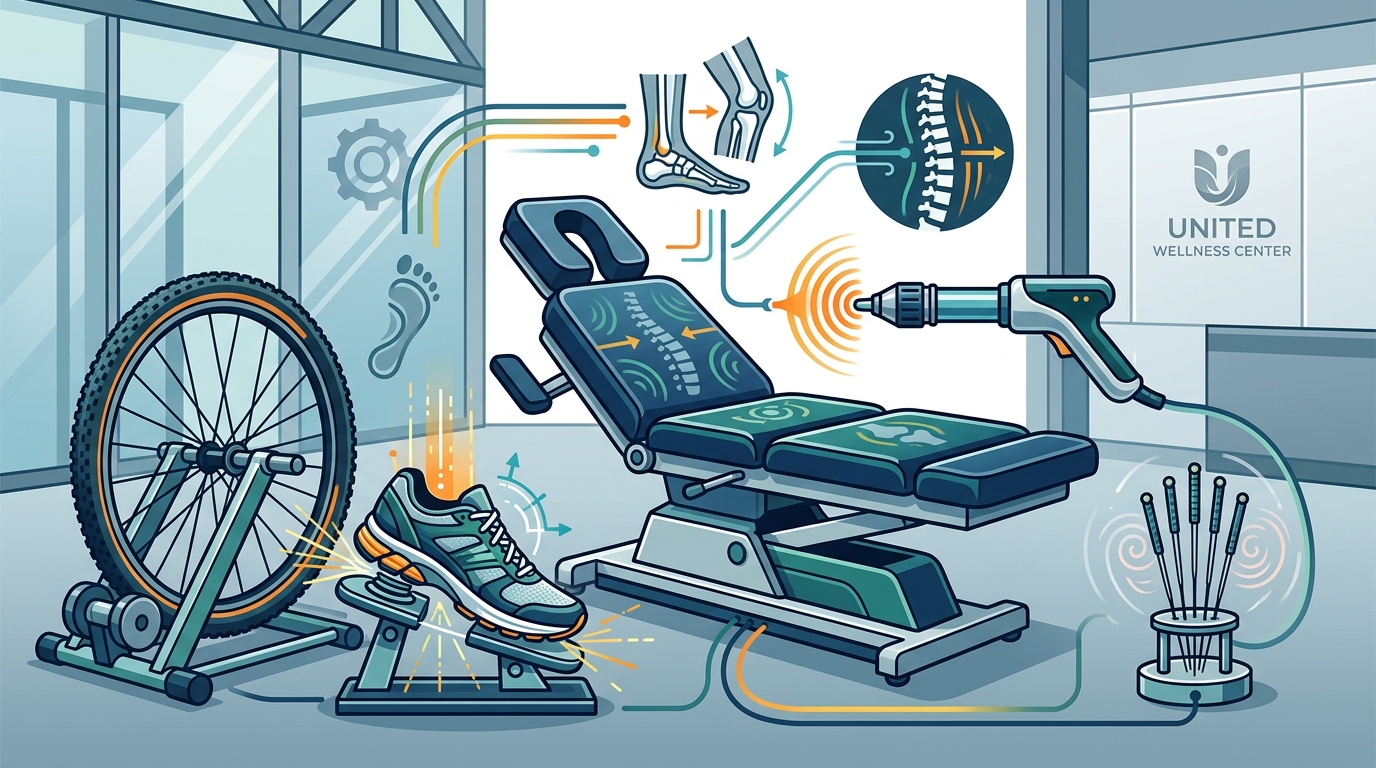
Modern sports chiropractic centers utilize a variety of advanced technologies to accelerate recovery. These modalities complement manual adjustments and provide a holistic approach to injury treatment.
Shockwave Therapy
Extracorporeal shockwave therapy uses high-energy sound waves to stimulate healing in chronic injuries. This treatment is particularly effective for plantar fasciitis and tendonitis. It promotes angiogenesis, the formation of new blood vessels, which speeds up the repair process.
Graston Technique
The Graston Technique involves the use of specialized instruments to detect and break down scar tissue and adhesions. This method allows for more precise treatment than manual therapy alone. It helps restore normal function to the affected soft tissues and reduces pain.
Activator Method
The Activator Method is a low-force adjustment technique that uses a handheld instrument to deliver a precise impulse to the spine or extremities. This method is ideal for patients who prefer a gentler approach or have acute inflammation. It ensures accurate alignment without the need for high-velocity manipulation.
Chiropractic vs. Physical Therapy
While both chiropractic care and physical therapy aim to reduce pain and improve function, they approach treatment from different angles. Understanding the distinction helps patients choose the right path for their specific needs.
| Feature | Chiropractic Care | Physical Therapy |
|---|---|---|
| Primary Focus | Spinal alignment and nervous system function | Muscle strengthening and rehabilitation |
| Treatment Method | Manual adjustments, shockwave, Graston | Exercises, ultrasound, electrical stimulation |
| Best For | Joint dysfunction, nerve compression, acute pain | Post-surgical rehab, chronic weakness, mobility |
| Integration | Often combined with PT for comprehensive care | Often combined with chiropractic for structural support |
At United Wellness & Sports Rehab, the integration of these disciplines is seamless. Patients receive a coordinated care plan that addresses both structural alignment and muscular strength. This holistic approach ensures that injuries are treated at their root cause, not just the symptoms.
Key Takeaways
- Biomechanical Analysis: Effective treatment begins with identifying the root cause of pain through kinetic chain analysis.
- Running Injuries: Plantar fasciitis, shin splints, and IT band syndrome are common and require targeted soft tissue work.
- Cycling Pain: Lower back pain and neck strain are often linked to bike fit and posture issues.
- Advanced Modalities: Shockwave therapy and Graston Technique accelerate healing in chronic soft tissue injuries.
- Integrated Care: Combining chiropractic adjustments with physical therapy yields the best long-term outcomes.
- Prevention: Regular maintenance care helps prevent injuries before they become acute issues.
- Expertise: Specialized sports chiropractors understand the unique demands of athletic performance.
Frequently Asked Questions
How long does it take to recover from a running injury?
Recovery time varies depending on the severity of the injury and the individual’s adherence to the treatment plan. Mild cases may resolve in a few weeks, while chronic issues can take several months. Consistent chiropractic care and proper rest are essential for optimal healing.
Can chiropractic care help with cycling neck pain?
Yes, chiropractic adjustments can relieve tension in the neck and shoulders caused by poor riding posture. Additionally, a bike fit analysis can help adjust the handlebar position to reduce strain on the cervical spine.
What is the Activator Method?
The Activator Method is a low-force adjustment technique that uses a handheld instrument to deliver a precise impulse to the spine or extremities. It is ideal for patients who prefer a gentler approach to spinal correction.
Is shockwave therapy painful?
Shockwave therapy may cause some discomfort during the treatment, but it is generally well-tolerated. The procedure stimulates the body’s natural healing response, which can lead to significant pain relief over time.
How often should I see a sports chiropractor?
The frequency of visits depends on your specific needs and goals. Acute injuries may require weekly visits initially, while maintenance care for athletes might involve bi-weekly or monthly sessions. Your provider will create a personalized schedule based on your progress.
Do you treat cyclists with back pain?
Absolutely. Lower back pain is a common issue among cyclists due to the forward-leaning posture. Chiropractic care focuses on restoring spinal mobility and pelvic alignment to alleviate this pain.
What is the Graston Technique?
The Graston Technique is a form of instrument-assisted soft tissue mobilization. It involves using specialized tools to detect and break down scar tissue and adhesions, promoting faster healing and improved mobility.
Schedule Your Evaluation
Don’t let running or cycling injuries sideline your passion. United Wellness & Sports Rehab offers specialized care for athletes of all levels. Our team of experts is dedicated to helping you recover faster and perform better. Schedule an appointment online today to begin your journey to pain-free movement. Visit our Reston or McLean office to experience our comprehensive sports therapy services.