
Chronic tendon injuries affect millions of athletes and active adults annually, often resisting traditional rest and ice protocols. According to recent orthopedic literature, extracorporeal shockwave therapy (ESWT) has emerged as a primary non-invasive intervention for conditions like plantar fasciitis and tennis elbow, with success rates frequently exceeding 70% in clinical studies. This guide details how this technology works, what to expect during your session at a specialized center, and how to optimize your recovery timeline. (About Us United Wellness)
What Is Shockwave Therapy?
Shockwave therapy is a non-invasive medical treatment that uses high-energy acoustic waves to stimulate healing in damaged tissues. Shockwave therapy is a targeted physical therapy modality that delivers sound waves to specific areas of the body to promote cellular regeneration. Unlike ultrasound, which uses continuous waves for imaging, shockwave therapy uses pulsed waves to create micro-trauma in the tissue. This controlled micro-trauma triggers the body's natural healing response, increasing blood flow and reducing chronic pain.
At specialized facilities like United Wellness & Sports Rehab, this technology is often combined with other modalities such as Graston Technique or dry needling to enhance overall outcomes. The treatment is particularly effective for calcific tendonitis, where the acoustic waves help break down calcium deposits that cause pain and restricted movement.
Common Injuries Treated
While shockwave therapy is versatile, it is most commonly prescribed for chronic overuse injuries that have failed to respond to conservative care. Understanding which conditions respond best to this treatment is crucial for setting realistic expectations.
Plantar Fasciitis
This is one of the most frequent indications for shockwave therapy. The condition involves inflammation of the thick band of tissue that runs across the bottom of your foot. Chronic plantar fasciitis can lead to heel spurs and significant mobility issues. Clinical data indicates that shockwave therapy can reduce pain scores by up to 50% within three months for many patients.
Tennis Elbow (Lateral Epicondylitis)
Despite its name, this injury affects both tennis players and office workers. It involves micro-tears in the tendons that join the forearm muscles to the bony bump on the outside of the elbow. Shockwave therapy helps regenerate these torn tendons, restoring grip strength and reducing pain during daily activities.
Achilles Tendinopathy
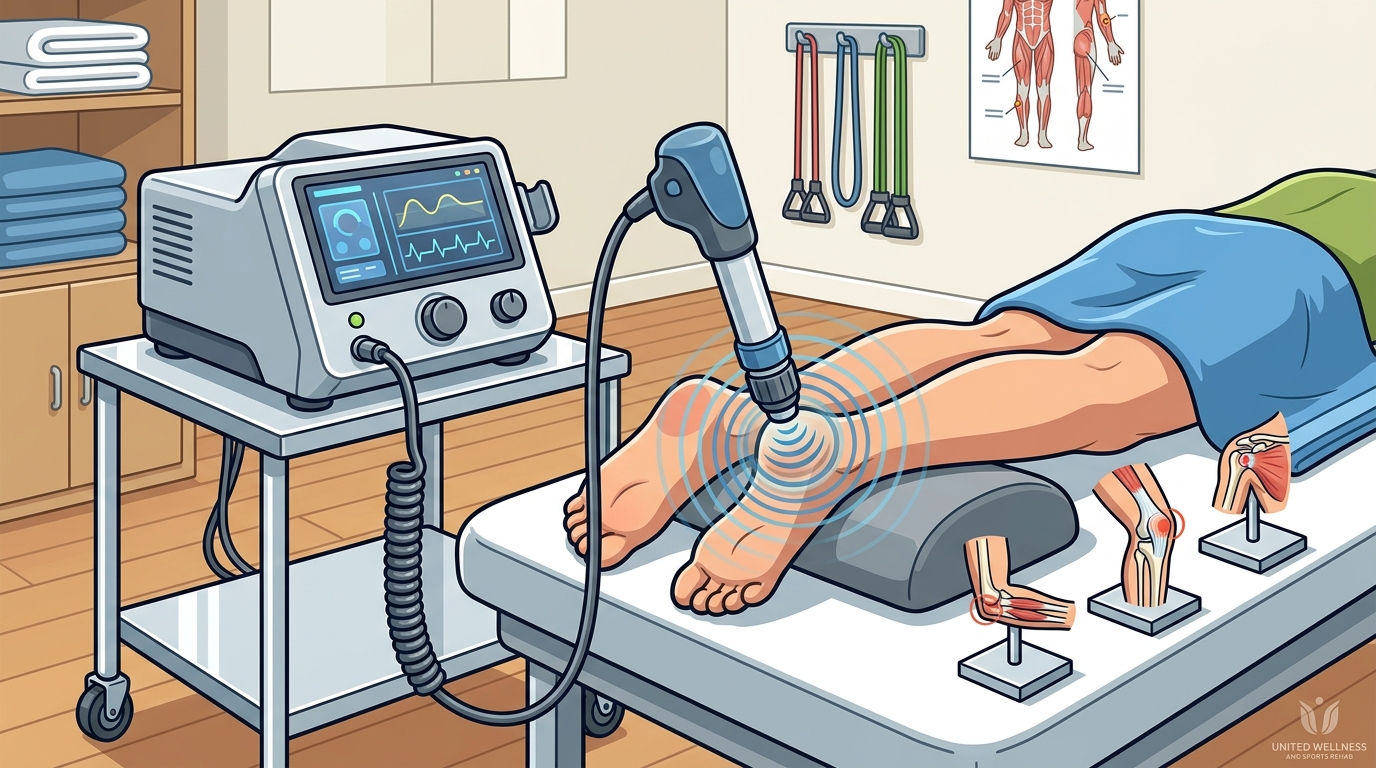
The Achilles tendon connects the calf muscles to the heel bone. Overuse can lead to degeneration and pain. Treatment with focused shockwaves can stimulate collagen production, which is essential for tendon repair. This is particularly valuable for athletes who need to return to high-impact sports quickly.
Rotator Cuff Tendinitis
Shoulder pain is common in overhead athletes. Shockwave therapy can penetrate deep into the shoulder joint to address calcific deposits and inflamed tissue, offering a non-surgical alternative to rotator cuff repairs.
The Treatment Process
Undergoing shockwave therapy is a straightforward procedure, but it requires preparation and adherence to specific protocols to ensure efficacy. Here is the step-by-step workflow you will experience at a professional clinic.
Step 1: Initial Consultation and Mapping
Before any waves are delivered, a physical therapist or chiropractor will perform a thorough examination. They will identify the exact pain generator using palpation and movement tests. Ultrasound imaging may be used to map the depth of the injury and ensure the shockwaves are targeted correctly. This precision is critical for avoiding damage to surrounding healthy tissue.
Step 2: Gel Application and Coupling
A conductive gel is applied to the skin over the treatment area. This gel is essential because sound waves do not travel well through air. The gel ensures that the energy from the shockwave device is transmitted efficiently into the body. Without proper coupling, the treatment would be ineffective and potentially painful.
Step 3: Shockwave Delivery
The therapist places the applicator tip against the skin and delivers the shockwaves. You will feel a series of rapid, pulsing impacts. The intensity is adjusted based on your pain tolerance and the specific condition being treated. Most patients report a sensation of deep pressure or mild discomfort, but the procedure is generally well-tolerated without anesthesia.
Step 4: Post-Treatment Assessment
After the session, the gel is wiped away, and the therapist will assess your immediate response. You may be given specific instructions on ice application or gentle stretching. It is normal to experience some soreness for 24 to 48 hours after treatment, which is a sign that the healing process has been initiated.
Key Benefits Over Surgery
For many chronic injuries, surgery is considered a last resort. Shockwave therapy offers a compelling alternative with a superior risk profile. The following table compares the two approaches.
| Feature | Shockwave Therapy | Surgical Intervention |
|---|---|---|
| Invasiveness | Non-invasive, outpatient | Invasive, requires incision |
| Recovery Time | Days to weeks | Months to a year |
| Risk of Infection | Negligible | Present, though low |
| Cost | Lower upfront cost | High (surgery + rehab) |
| Effectiveness | High for chronic cases | High for structural tears |
Research published in major sports medicine journals supports the efficacy of shockwave therapy as a first-line treatment for chronic tendinopathies. By avoiding surgery, patients can maintain their daily routines and return to activity faster. For those in the DC area, United Wellness & Sports Rehab provides these services in both Reston and McLean, making it accessible for local athletes.
Recovery and Aftercare
Proper aftercare is just as important as the treatment itself. The body needs time to respond to the micro-trauma induced by the shockwaves. Ignoring these guidelines can lead to prolonged pain or treatment failure.
Activity Modification
For the first 48 hours, avoid high-impact activities such as running or jumping. You should continue to move gently to promote blood flow, but do not push through pain. Many patients find that light walking or swimming is beneficial during this phase.
Pain Management
It is crucial to avoid anti-inflammatory medications (NSAIDs) like ibuprofen or naproxen for at least two weeks after treatment. These drugs can inhibit the inflammatory response that is necessary for healing. Instead, use acetaminophen if pain relief is needed. Ice packs can be applied for 15 minutes at a time to manage soreness.
Follow-Up Sessions
Most treatment protocols require 3 to 5 sessions spaced one week apart. The cumulative effect of these sessions is what drives long-term healing. Skipping sessions can reduce the overall effectiveness of the therapy. Your provider at United Wellness will monitor your progress and adjust the intensity or frequency as needed.
Frequently Asked Questions
Is shockwave therapy painful?
Most patients describe the sensation as uncomfortable but tolerable. The intensity can be adjusted to your comfort level. Some areas, such as the ankle or elbow, may be more sensitive due to less soft tissue coverage.
How many sessions are needed?
Typically, 3 to 5 sessions are required for optimal results. The exact number depends on the chronicity of the injury and the individual's healing response. Some patients see improvement after just one session.
When will I see results?
Results are not always immediate. It can take 4 to 6 weeks after the final session for the full benefits to manifest. This is because the biological healing process takes time to complete.
Are there any side effects?
Common side effects include temporary redness, swelling, or bruising at the treatment site. These usually resolve within a few days. Serious side effects are rare when performed by a qualified professional.
Can I drive after treatment?
Yes, you can drive immediately after treatment unless you have received anesthesia, which is rarely used for this procedure. However, if the treatment was on your leg, ensure you are not in significant pain before operating a vehicle.
Does insurance cover shockwave therapy?
Coverage varies by provider and plan. Many insurance plans cover shockwave therapy for specific indications like plantar fasciitis. It is advisable to check with your provider and the clinic's billing department before starting treatment.
Who should avoid this therapy?
Pregnant women, patients with blood clotting disorders, or those with infections at the treatment site should avoid shockwave therapy. It is also not recommended for children whose growth plates are still open.
Start Your Recovery Today
If you are suffering from a chronic sports injury, shockwave therapy may be the solution you have been looking for. Do not let pain dictate your lifestyle. Visit United Wellness & Sports Rehab to schedule your consultation. Our team of experts is ready to help you achieve your health goals through evidence-based care.