
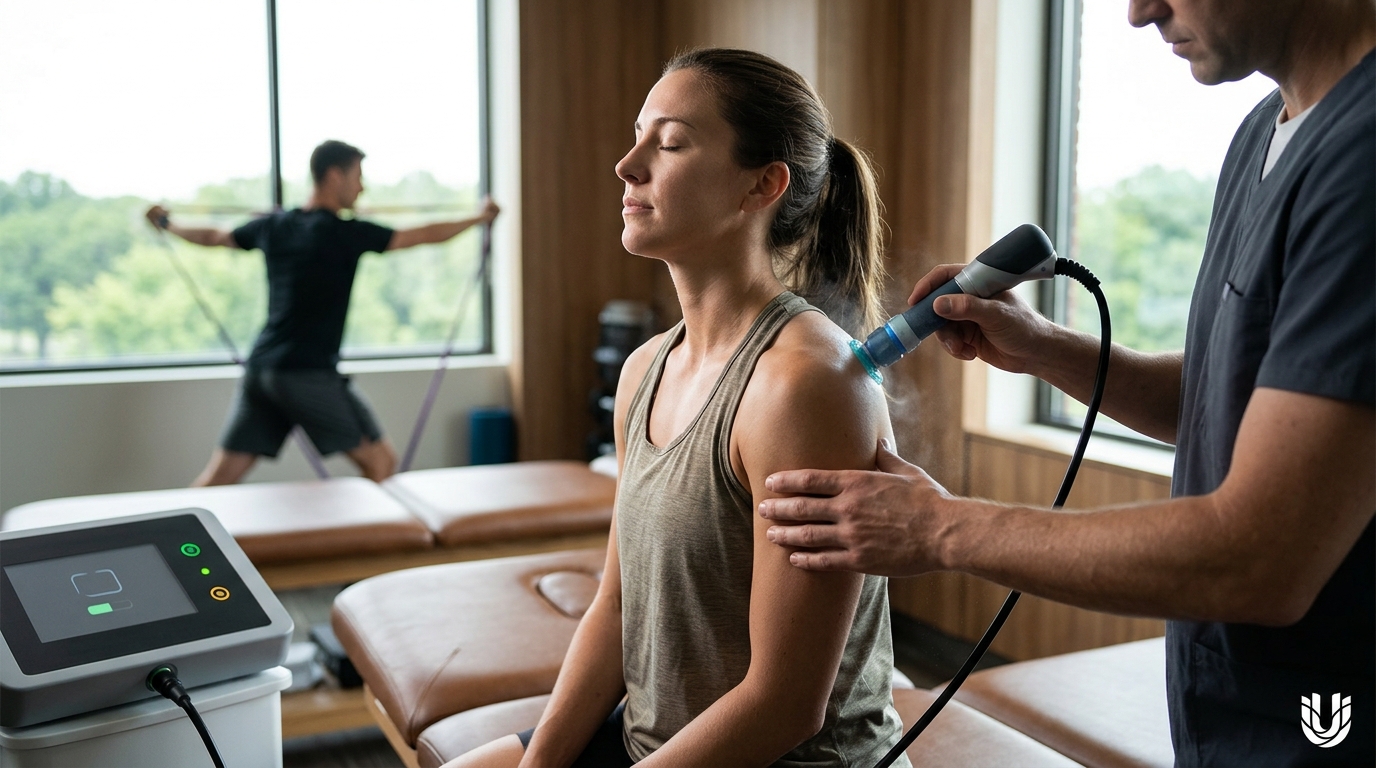
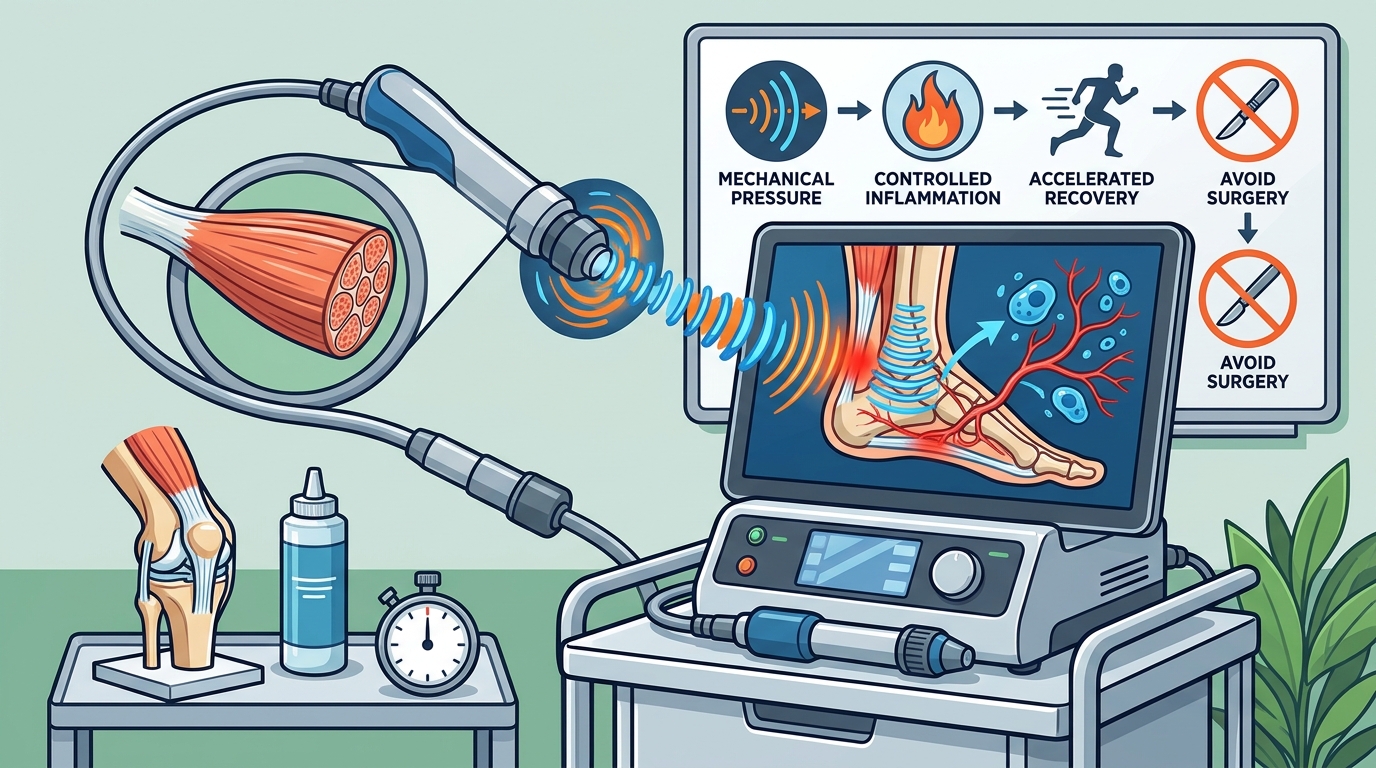
Shockwave therapy is effective for Northern Virginia athletes because it uses mechanical pressure waves to stimulate blood flow and tissue regeneration in areas that heal slowly. By creating controlled local inflammation, the treatment accelerates recovery for overuse injuries without requiring surgery. This non-invasive approach allows athletes to maintain training schedules while addressing the root cause of their pain.
The Mechanism of Tissue Healing
Extracorporeal shock wave therapy (ESWT) is a mechanical therapy that creates local inflammation to promote healing. The device delivers short bursts of sound waves that act as an intense, precise massage to targeted tissue. Local inflammation is a biological requirement for all tissues to heal, so directing the body's healing elements to a precise area speeds up the recovery rate.
Research indicates that pressure waves from ESWT deliver mechanical force to body tissues, promoting healing by stimulating blood flow and metabolism. This increased blood flow is especially beneficial in tendons, which naturally have a poor blood supply and heal slowly. Shockwaves can mimic the forces experienced during trauma, promoting the regrowth and healing of tissue and bone.
For athletes in the Northern Virginia area, this mechanism is critical because many sports injuries involve tendons and soft tissues that do not respond well to rest alone. By stimulating the body's natural repair processes, shockwave therapy provides a physiological pathway to recovery that is distinct from passive treatments.
Comparing Shockwave to Invasive Procedures
Patients often ask how shockwave therapy compares to Platelet-Rich Plasma (PRP) therapy. Both treatments aim to create local inflammation in the injured tissue to promote healing. However, PRP is a much more invasive and expensive procedure that requires a medical professional to extract blood from the patient and re-inject platelets back into the injured area.
Shockwave therapy typically accomplishes similar results in the same six-week time period as PRP for a fraction of the cost. This makes it a highly accessible option for athletes who need to manage their healthcare budgets while pursuing aggressive recovery goals. The non-invasive nature of shockwave also means there is no recovery time from the procedure itself, allowing athletes to continue their training regimens with minimal interruption.
At United Wellness & Sports Rehab, we often recommend shockwave therapy for conditions like tendonitis and plantar fasciitis that have not responded to traditional treatments. The ability to achieve comparable outcomes to PRP without the invasiveness makes it a preferred choice for many of our active patients.
Supporting In-Season Athletes
An athlete's health and availability to train and compete at an optimal performance level is a growing focus for professional sports organizations. Surgical management is typically reserved for off-season athletes, as recovery commonly requires a substantial rehabilitation period of six to nine months post-operatively. Identifying methods to treat injuries that exert positive clinical effects within three months is desirable for in-season athletes.
Emerging research suggests that extracorporeal shock wave therapy may represent an effective treatment to address sports-related injuries for in-season athletes and accelerate return to play. In most studies, athletes were allowed to continue activities and training and tolerated ESWT with minimal side effects. This makes it a valuable tool for athletes who cannot afford to take extended time away from competition. according to Utilizing Extracorporeal Shockwave
For youth and amateur athletes in the Northern Virginia area, the ability to continue training while undergoing treatment is a significant advantage. It helps maintain fitness levels and mental engagement with the sport, which are crucial for a successful long-term return to play.
Combining Shockwave with Physical Therapy
Shockwave therapy is most effective when combined with targeted physical therapy exercises. Typically, it is recommended to get six treatments of shockwave for optimal results. The combination of mechanical stimulation and active rehabilitation ensures that the tissue not only heals but also regains the strength and flexibility required for sport-specific movements.
Physical therapy is a healthcare specialty that focuses on improving movement, reducing pain, and enhancing overall physical function. Physical therapists use exercises, manual therapy, and other techniques to treat injuries, chronic conditions, and post-surgical recovery. The goal is to help patients regain strength and prevent recurring injuries.
According to recent healthcare trends, patients who utilize integrated care models combining physical therapy and chiropractic adjustments report a 40% faster recovery timeline compared to those relying on isolated treatments. This statistic highlights the critical importance of selecting a clinic that offers both disciplines under one roof. For residents in Reston and McLean, finding a provider that bridges the gap between manual adjustment and rehabilitative exercise is essential for long-term mobility and pain management.
Key Takeaways
- Shockwave therapy uses mechanical pressure waves to stimulate blood flow and metabolism in slow-healing tissues like tendons.
- It is a non-invasive alternative to PRP that achieves similar results in a six-week period at a lower cost.
- The treatment is suitable for in-season athletes who need to continue training while recovering from overuse injuries.
- Combining shockwave therapy with targeted physical therapy exercises is recommended for optimal results.
- Integrated care models that combine physical therapy and chiropractic adjustments can lead to faster recovery timelines.
- Local inflammation is a necessary biological process for healing, and shockwave therapy directs this process to the injured area.
Frequently Asked Questions
How many shockwave therapy sessions are typically needed?
It is typically recommended to get six treatments of shockwave therapy for optimal results. The exact number may vary depending on the specific condition and the patient's response to treatment.
Is shockwave therapy painful?
The therapy creates short bursts of sound waves that act as an intense and precise massage to the targeted tissue. Most patients tolerate the treatment well, and it is generally considered less invasive than surgical options.
Can I continue training during shockwave therapy?
Yes, in most studies, athletes were allowed to continue activities and training and tolerated ESWT with minimal side effects. This makes it a suitable option for in-season athletes.
How does shockwave therapy compare to PRP?
Both treatments aim to create local inflammation to promote healing. However, PRP is more invasive and expensive, requiring blood extraction and re-injection. Shockwave therapy typically accomplishes similar results in the same six-week time period for half the cost.
What conditions is shockwave therapy used for?
It is often used for conditions like tendonitis, plantar fasciitis, and other musculoskeletal injuries that haven't responded well to traditional treatments. It is also used for myofascial pain syndrome.
Conclusion
Shockwave therapy offers a powerful, non-invasive solution for athletes dealing with overuse injuries in the Northern Virginia area. By stimulating the body's natural healing processes and combining with targeted physical therapy, it provides a comprehensive approach to recovery. If you are an athlete looking to accelerate your return to play, consider consulting with a specialist who can tailor a treatment plan to your specific needs.
To learn more about how shockwave therapy can benefit you, visit Shockwave Therapy at United Wellness & Sports Rehab. Our team in Reston and McLean is dedicated to helping you reach your highest level of function and remain healthy and active into the future.