

Sports injuries account for approximately 26 million emergency room visits annually in the United States alone, with a significant portion involving muscle strains, joint misalignments, and chronic overuse conditions. According to the CDC, the recovery trajectory for these injuries often depends heavily on the precision of the initial intervention. Athletes and active individuals frequently face a critical decision when seeking relief: should they pursue the mechanical realignment of chiropractic care or the targeted myofascial release of dry needling? Understanding the distinct physiological mechanisms of each therapy is essential for optimizing recovery time and preventing re-injury.
Mechanisms of Action
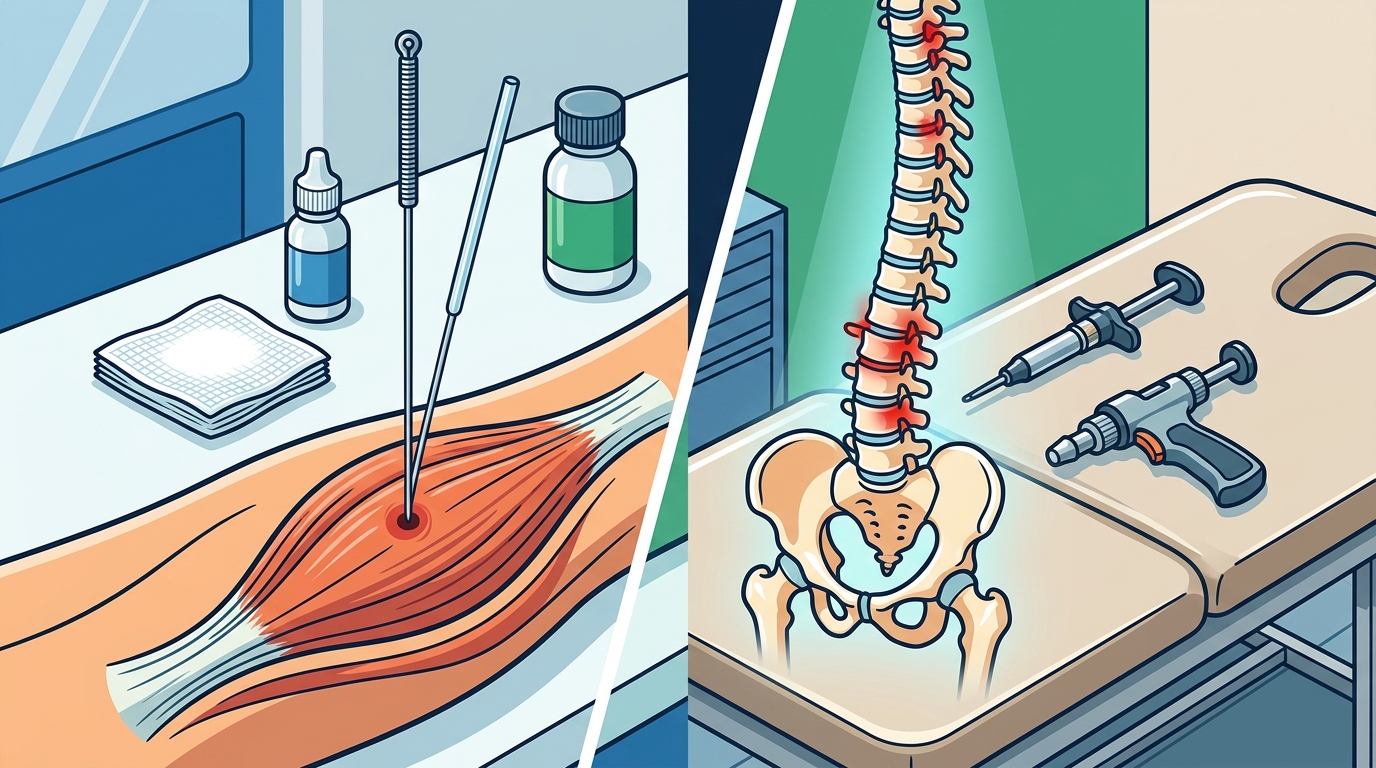
To make an informed decision, one must first understand how each therapy interacts with the human body. Dry needling is a technique that uses thin, solid filiform needles to penetrate the skin and stimulate underlying muscles, trigger points, and connective tissues. This process aims to release muscle tension and reduce pain by eliciting a local twitch response in the affected muscle fibers. The primary goal is to deactivate myofascial trigger points that contribute to restricted movement and chronic pain.
Chiropractic care, on the other hand, focuses on the diagnosis and treatment of mechanical disorders of the musculoskeletal system, particularly the spine. Chiropractic adjustments involve manual manipulation of the joints to improve range of motion and physical function. The core philosophy rests on the idea that proper alignment of the body's musculoskeletal structure will enable the body to heal itself without surgery or medication. This approach addresses structural imbalances that may be causing pain or limiting athletic performance.
Benefits of Dry Needling
Dry needling has gained significant traction in sports medicine due to its ability to target specific areas of tension that may not be addressed by broader manual therapies. One of the most immediate benefits is the reduction of muscle tightness. By inserting needles into trigger points, therapists can break up knots and restore normal muscle length. This is particularly effective for conditions like plantar fasciitis, where localized tension in the foot and calf muscles contributes to heel pain.
Another critical advantage is the improvement of blood flow to injured tissues. The needle insertion triggers a healing response that increases circulation to the area, delivering oxygen and nutrients necessary for tissue repair. Research published in the Journal of Bodywork and Movement Therapies indicates that dry needling can significantly reduce pain intensity in patients with chronic neck pain. This makes it an excellent adjunct therapy for athletes dealing with persistent discomfort that has not responded to rest alone.
Dry needling is also highly efficient for treating myofascial pain syndrome. This condition involves pain and inflammation in the connective tissue covering the muscles. By targeting these specific trigger points, practitioners can alleviate referred pain patterns that often confuse patients and delay recovery. For example, a trigger point in the shoulder blade might refer pain down the arm, mimicking a nerve injury. Dry needling addresses the root cause rather than just the symptom.
Advantages of Chiropractic Care
Chiropractic care offers a holistic approach to sports injury recovery by focusing on the structural integrity of the body. A primary benefit is the restoration of joint mobility. When joints are restricted due to injury or poor posture, the body compensates by altering movement patterns. These compensations can lead to secondary injuries in other parts of the body. Chiropractic adjustments help correct these subluxations, allowing for proper biomechanics during athletic activities.
Neurological function is another area where chiropractic care excerts a positive influence. The spine houses the central nervous system, and any interference along this pathway can affect muscle control and coordination. By ensuring the spine is properly aligned, chiropractors help optimize nerve communication between the brain and the body. This can lead to improved reaction times and better overall athletic performance. According to studies in the Journal of Chiropractic Medicine, spinal manipulation can reduce pain and improve function in patients with acute low back pain.
Furthermore, chiropractic care often includes rehabilitative exercises and lifestyle counseling. This comprehensive approach helps athletes not only recover from their current injury but also prevent future ones. By strengthening supporting muscles and improving posture, patients build resilience against the physical demands of their sport. This preventive aspect is crucial for long-term health and sustained athletic participation.
Comparing Modalities for Specific Injuries
Choosing between dry needling and chiropractic care often depends on the specific nature of the sports injury. Below is a comparison of how each therapy addresses common athletic conditions.
| Injury Type | Dry Needling Efficacy | Chiropractic Care Efficacy | Recommended Approach |
|---|---|---|---|
| Myofascial Trigger Points | High | Moderate | Dry Needling |
| Spinal Misalignment | Low | High | Chiropractic Care |
| Plantar Fasciitis | High | Moderate | Dry Needling |
| Sciatica | Moderate | High | Chiropractic Care |
| Rotator Cuff Tendinitis | High | Moderate | Dry Needling |
For injuries primarily characterized by muscle tightness, spasms, or localized pain, dry needling is often the superior choice. It directly addresses the soft tissue components that may be restricting movement. Conversely, for issues related to joint dysfunction, spinal alignment, or nerve impingement, chiropractic care provides the structural corrections needed to restore function. In many cases, a combination of both therapies yields the best results, addressing both the soft tissue and skeletal components of the injury.
Key Takeaways
- Dry needling targets myofascial trigger points to release muscle tension and improve local blood flow.
- Chiropractic care focuses on spinal alignment and joint mobility to optimize nervous system function.
- Dry needling is particularly effective for plantar fasciitis and rotator cuff issues.
- Chiropractic adjustments are crucial for correcting subluxations and preventing compensatory injuries.
- Both therapies are non-invasive and avoid the risks associated with pharmaceutical pain management.
- Integrated treatment plans often combine both modalities for comprehensive recovery.
- Early intervention with either therapy can significantly reduce recovery time for acute sports injuries.
Frequently Asked Questions
Is dry needling the same as acupuncture?
No, dry needling is not the same as acupuncture. While both use thin needles, dry needling is based on Western anatomical and neurophysiological principles, targeting specific trigger points in muscles. Acupuncture is rooted in Traditional Chinese Medicine and focuses on balancing energy flow along meridians.
Can chiropractic care help with knee pain?
Yes, chiropractic care can help with knee pain, especially if it stems from hip or ankle misalignments that affect gait mechanics. By correcting these structural issues, chiropractors can reduce stress on the knee joint and alleviate pain.
How many sessions of dry needling are typically needed?
The number of sessions varies depending on the severity of the condition. Acute injuries may respond well to one or two sessions, while chronic conditions might require a series of treatments over several weeks to achieve lasting results.
Is chiropractic adjustment painful?
Most patients do not find chiropractic adjustments painful. You may feel some pressure or a popping sensation, which is normal. Any discomfort is usually mild and short-lived. According to spine-health resources, the benefits of improved mobility often outweigh any temporary discomfort.
Can I combine dry needling and chiropractic care?
Absolutely. Combining these therapies is a common and effective strategy. Dry needling can relax tight muscles, making chiropractic adjustments more effective and comfortable. This integrated approach addresses both soft tissue and skeletal components of an injury.
Are there any risks associated with dry needling?
Dry needling is generally safe when performed by a trained professional. Minor side effects may include soreness or bruising at the needle site. Serious complications are rare but can occur if the procedure is not performed correctly.
How does dry needling reduce pain?
Dry needling reduces pain by triggering a local twitch response in the muscle, which helps reset the muscle fibers and release tension. It also stimulates the nervous system to release natural pain-relieving chemicals like endorphins.
Schedule Your Consultation
Recovering from a sports injury requires a strategic approach tailored to your specific needs. At United Wellness Center, we specialize in integrating advanced therapeutic modalities to accelerate your return to activity. Whether you need the targeted relief of dry needling or the structural corrections of chiropractic care, our team is here to guide your recovery. Contact us today to schedule a comprehensive evaluation and develop a personalized treatment plan. Visit our services page to learn more about how we can help you achieve optimal health.